


CENTRAL ANTI-ATLAS TRAVERSE: the northern border of the West African Craton
By DR. M. OUKASSOU, DR. H. EL HADI, DR. F. HAISSEN, DR. N. SABER
ITINERARY and OBJECTIVES
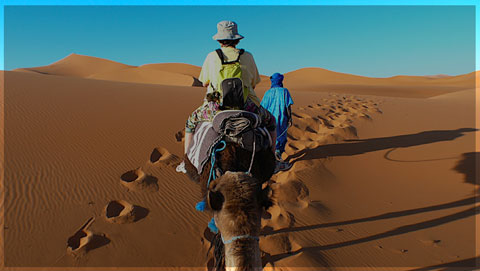
The south of Morocco is one of the most attractive touristic areas with diversified landscapes from snowy mountains to desert plains. The High Atlas with his 3000 to 4000 meters forms a major climatic barrier to the Atlantic perturbations, which account for the arid climate of the Anti Atlas sub Saharan domain south of the chain. These regions are occupied by berbere speaking populations with long hospitality tradition.
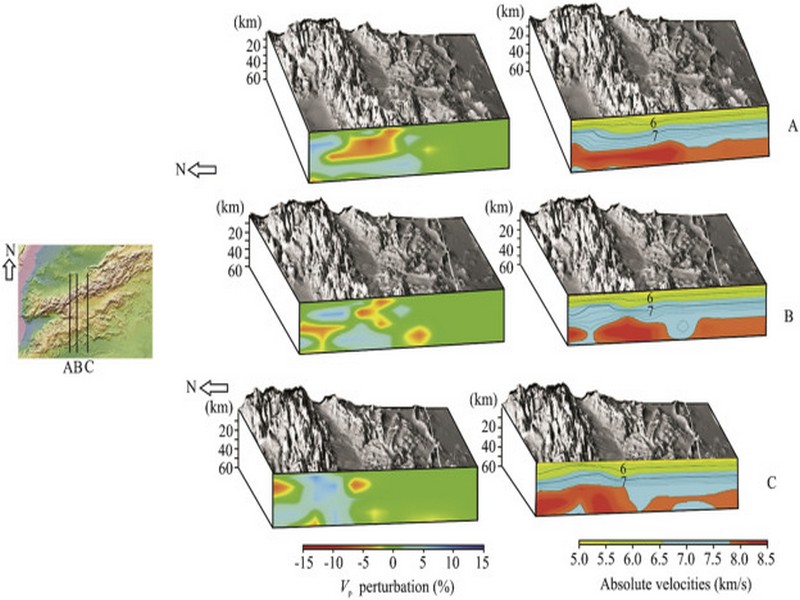
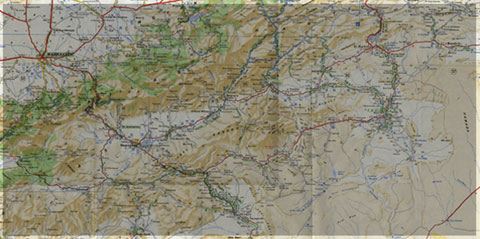
The two day trips follow most touristic roads and visit outstanding outcrops illustrating a central transect across the Anti-Atlas belt (figures G1 & G2), which corresponds to the external fold belt of the Hercynian (Variscan, Alleghanian) chain, but it also includes large Pan African inliers. The High Atlas formed during the Cenozoic at the expense of an aborted Triassic Jurassic rift. Therefore, three superimposed Wilsonian cycles can be illustrated during the trips. The itinerary will make possible to illustrate the complex geological history of these areas from 2 Ga to present day. Our purpose is to present and discuss various regional and thematic (sediment logical, structural, magmatic and
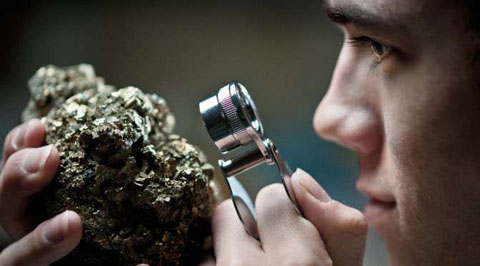
metamorphic) features, which record the main geodynamical events during this long geological history. Magnificent minerals (erhytrite, vanadinite...) and fossils (trilobites, goniatites...) can be purchased at many places.
During this field trip, the AgdzBou Azzer Tazenakht Agdzloop (figureG3)allows the participants to discover the PanAfrican belt (external platform domain in the Zenaga inlier, ophiolitic suture zone at Bou Azzer), the early volcano clastic cover sequence (late Neoproterozoic), and the mildly folded Early Paleozoic sediments (Cambrian and Ordovician).
Detailed road log for the trip are provided below along with Global Positioning Satellite (GPS) location at each stop. Note that all the stops are on public roads, and that the use of hammers and the collection of rocks are permitted.


Source web: DR. M. OUKASSOU, DR. H. EL HADI, DR. F. HAISSEN, DR. N. SABER sociedadgeologica.es
Les articles en relation
Réchauffement climatique : les prévisions du Giec étaient trop optimistes
Réchauffement climatique : les prévisions du Giec étaient trop optimistes D'ici 2100, la Terre pourrait se réchauffer de 15 % de plus que la pire des prédictions du Giec (Groupe d'experts in
Savoir plus...
Que voir à Tan-Tan, DÉSERT DE TAN-TAN (Géoparc Jbel Bani)
Que voir à Tan-Tan, DÉSERT DE TAN-TAN (Géoparc Jbel Bani) Avant poste saharien, ce sont deux dromadaires blancs, gigantesques, qui accueillent le visiteur à l’entrée de la ville… D&e
Savoir plus...
Des chevauchées fantastiques
Des chevauchées fantastiques M’enveloppèrent d’un étrange nuage Et laissèrent dans les pores de ma peau Leurs empreintes de poussière. SUR LA PISTE DES BIJOUX DU
Savoir plus...
5 periods of mass extinction on Earth are we entering the sixth?
5 periods of mass extinction on Earth are we entering the sixth? Our earth is very old. Based on the estimation of the oldest rock, it’s around 4.5 billion years of age. Scientists from all over the world use astronomy, geol
Savoir plus...
Comment sécuriser la ressource hydrique
Comment sécuriser la ressource hydrique Trois nouveaux axes en phase d’être déployés Priorité au dessalement et au recyclage des eaux usées La rareté de l’eau gagne p
Savoir plus...
Alfa, l’herbe du désert
Alfa, l’herbe du désert “L’alfa” (Macrochloa tenacissima) est cette plante herbacée vivace originaire des régions arides que l’on trouve aussi dans le désert. De l’Arabe
Savoir plus...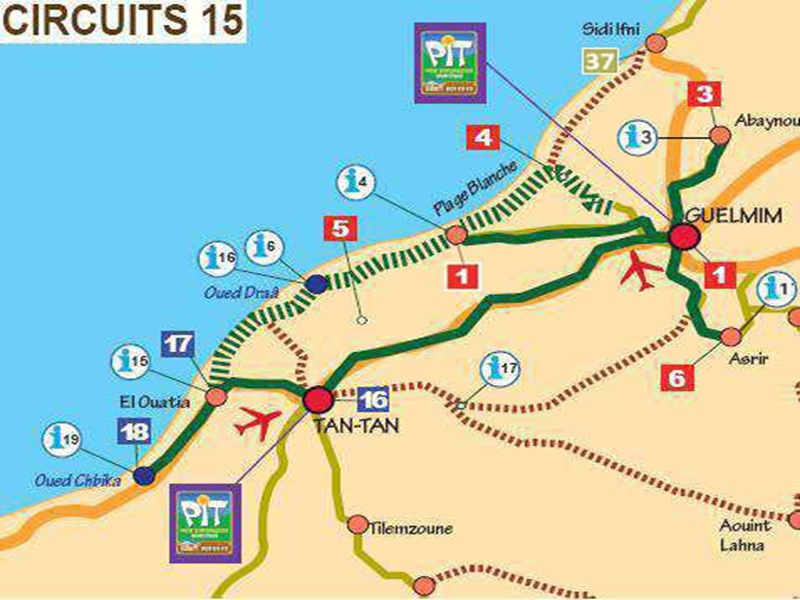
Circuits a la decouverte de la région Guelmim-géoparc jbel bani
Circuits a la decouverte de la région Guelmim-géoparc jbel bani Pour simple Berline : Excursions au départ de GUELMIM : Abaynou / Plage Blanche / Asrir-Tighmert / Tan Tan Avec 4x4 : Plage Blanc
Savoir plus...
5 lacs incroyables sur Terre
5 lacs incroyables sur Terre Cette vidéo nous emmène à la découverte de cinq lacs tout à fait extraordinaires. Très salé, cachant des arbres, hostile à la vie où empli de
Savoir plus...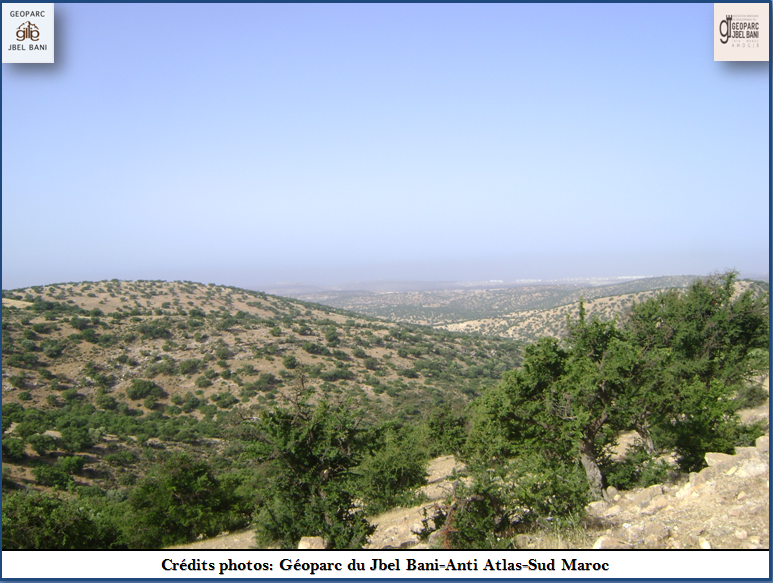
Les 10 arbres fruitiers spontanés du Maroc
Les 10 arbres fruitiers spontanés du Maroc Le Maroc, pays où l’agriculture occupe un rôle très important, est une terre qui compte de nombreuses espèces d’arbres. Le Maroc, pays de passage, a
Savoir plus...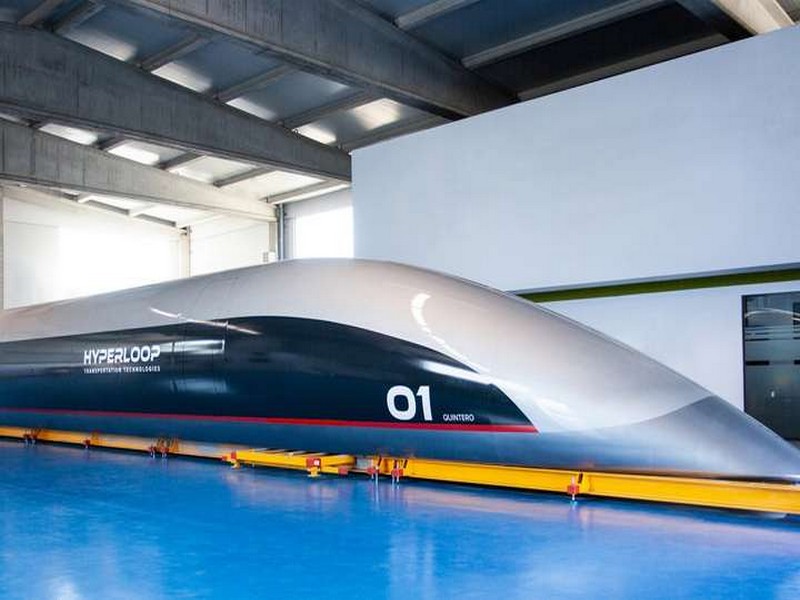
Hyperloop Transportation Technologies dévoile sa capsule de transport de passagers
Hyperloop Transportation Technologies dévoile sa capsule de transport de passagers Longue de 32 mètres, la capsule Hyperloop Quintero One d'Hyperloop TT a été assemblée en Espagne et sera finali
Savoir plus...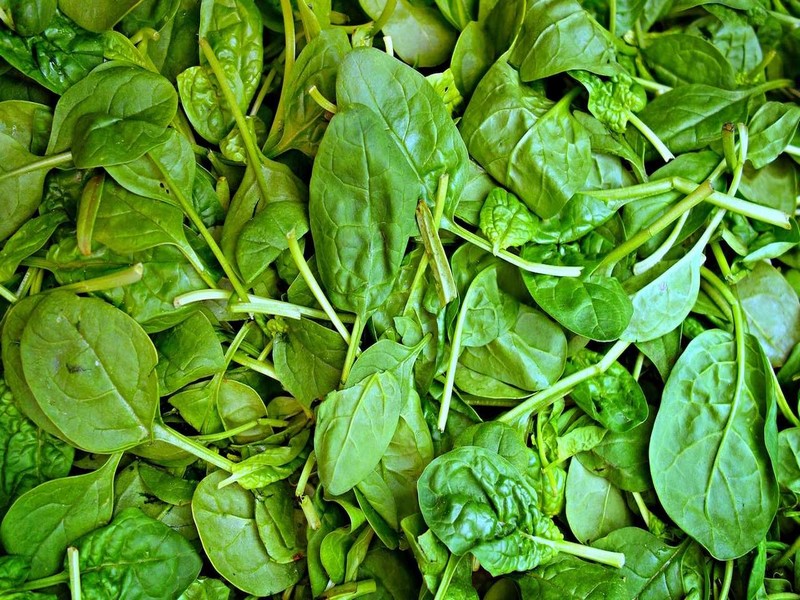
Les épinards rendent-ils vraiment plus costaud ?
Les épinards rendent-ils vraiment plus costaud ? « Mange tes épinards, si tu veux devenir fort ! » Enfant, nous avons tous entendu cette recommandation. Mais notre maman savait-elle r&ea
Savoir plus...Les tags en relation
En savoir plus sur " Géologie et TSGJB - AMDGJB ! "
Consulter les vidéos de " Géologie et TSGJB - AMDGJB ! " Consulter les photos de " Géologie et TSGJB - AMDGJB ! " Consulter les publications de " Géologie et TSGJB - AMDGJB ! " Consulter les éditions de " Géologie et TSGJB - AMDGJB ! " Consulter les communications de " Géologie et TSGJB - AMDGJB ! "Recherche du site
Recherche avancée / SpécifiqueVulgarisation à la géologie
Qu'est ce que les sciences de la terre: vulgarisation Qu'est ce que la géologie ? Géologie et TSGJB - AMDGJB !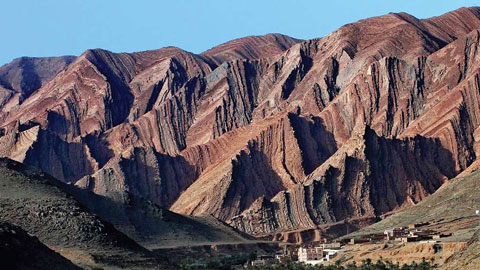
Géoparc et Recherche Scientifique
Le coins de l’étudiant
Blog Géoparc Jbel Bani
Dictionnaire scientifique
Plus de 123.000 mots scientifiques
Les publications
Géo parc Jbel Bani
Circuits & excursions touristiques
cartothéques
Photothéques
Publications & éditions